BNB CHAIN DOCUMENTATION
The official BNB Chain documentation explains BNB Smart Chain, opBNB, BNB Greenfield, staking, governance, development tools and the role of BNB across the ecosystem.
Visit BNB Chain Docs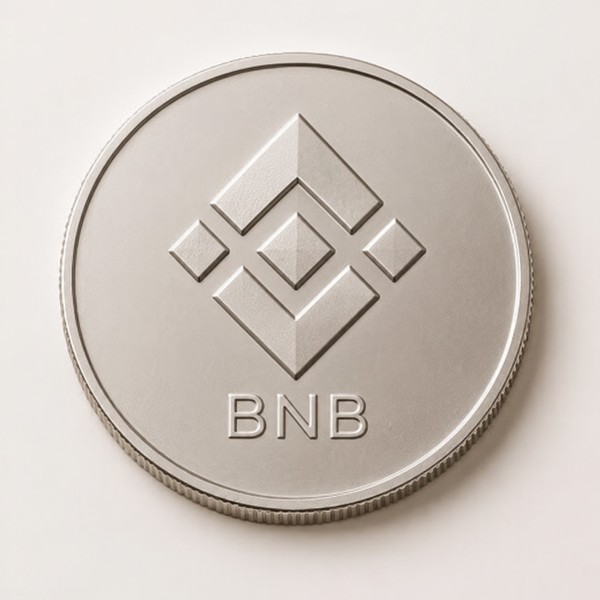
The native utility token of the BNB Chain ecosystem, used for network fees, staking, governance, decentralized applications and digital payments.
BNB is the native cryptocurrency of the BNB Chain ecosystem. It is used to pay transaction fees, interact with smart contracts and decentralized applications, participate in staking and governance, and access services that accept BNB. Unlike a dollar-backed stablecoin, BNB has a market price that can rise or fall significantly.
BNB originally stood for Binance Coin and was created for use with the Binance exchange. Its role later expanded beyond exchange-fee discounts into the native utility and governance asset of a broader blockchain ecosystem supported by users, developers, validators and delegators.
Creation: BNB was launched in 2017 by the founding team behind Binance. The project was led by Binance founder Changpeng Zhao (CZ), with Yi He as a Binance co-founder and an important member of the early team that developed the company and its ecosystem. BNB was therefore a company-led token project rather than a cryptocurrency attributed to one anonymous inventor.
Launch dates: the BNB initial coin offering ran from 26 June to 3 July 2017, shortly before the Binance exchange opened for trading. BNB was first issued as an ERC-20 token on Ethereum and was mainly intended to provide exchange-fee discounts and support the new platform. It later migrated from Ethereum to become the native asset of Binance Chain.
Project evolution: BNB Smart Chain officially launched on 1 September 2020 as an Ethereum Virtual Machine-compatible network for smart contracts and decentralized applications. The token's role expanded from an exchange utility token into the gas, staking and governance asset of BNB Chain. The ecosystem later added opBNB for Layer 2 scaling and BNB Greenfield for decentralized data ownership and storage.
BNB is the native token powering the BNB Chain ecosystem. That ecosystem currently has three connected components:
BNB may also appear on other networks as a wrapped or bridged token. Those representations are not the same technical asset as native BNB on BNB Chain. Before making a transfer, users must confirm that the sending wallet, receiving wallet and exchange all support the exact same network. Selecting BNB Smart Chain, opBNB or another network incorrectly can make funds difficult or impossible to recover.
BNB serves several groups because it is both a transferable cryptocurrency and the operating token of the BNB Chain ecosystem:
BNB's exact utility depends on the wallet, application, platform and country. Holding BNB does not guarantee access to every service or any financial return, and users should verify current product terms before transferring, staking or committing tokens to a smart contract.
The most important technical use of BNB is paying gas fees. Every transfer, token swap, smart-contract interaction or decentralized-application action on BNB Smart Chain consumes a small amount of BNB. This gives the token an operational role similar to ether on Ethereum.
BNB can be staked by validators or delegated by token holders to help secure the network and potentially earn rewards. It is also used in onchain governance, allowing eligible participants to vote on proposals and network changes. Across decentralized finance, BNB can be traded, supplied as liquidity, borrowed, lent or used as collateral, depending on the application.
Additional uses include payments, exchange-fee discounts, gaming, NFTs, token launches and decentralized storage. Each use introduces its own risks, including price volatility, smart-contract failures, validator or bridge risks, liquidation, platform custody and changing regulation.
BNB Smart Chain is the main EVM-compatible execution layer. It allows developers to build Solidity smart contracts and transfer many familiar Ethereum development patterns to a network designed for fast confirmations and relatively low transaction fees. Applications include decentralized exchanges, lending protocols, games, NFT markets and payment tools.
opBNB processes activity as a Layer 2 network connected to BSC, helping applications handle more transactions at lower cost. BNB Greenfield focuses on decentralized data ownership and storage. BNB coordinates economic activity across these parts of the ecosystem by serving as a fee, staking and governance asset.
BNB does not have a stable value and is not backed by dollars or another reserve asset. Its price is determined by market supply and demand. The Auto-Burn and BEP-95 mechanisms permanently remove selected amounts of BNB from circulation, while the Pioneer Burn Program may count eligible, provably lost user funds toward periodic burn totals. These mechanisms are designed to reduce supply over time, but a declining supply does not guarantee that the token's price will increase.
The following resources explain the BNB Chain architecture, BNB’s history, its major uses and the role it plays across BSC, opBNB and BNB Greenfield.
The official BNB Chain documentation explains BNB Smart Chain, opBNB, BNB Greenfield, staking, governance, development tools and the role of BNB across the ecosystem.
Visit BNB Chain DocsBinance Academy’s BNB overview describes the token’s 2017 launch, migration from Ethereum, current network uses, staking, governance, payments and supply-reduction mechanism.
Read the BNB Overview