TETHER TRANSPARENCY
Tether’s transparency page publishes information about tokens in circulation, reserve assets and reports intended to show the relationship between issuer assets and token liabilities.
View Tether Transparency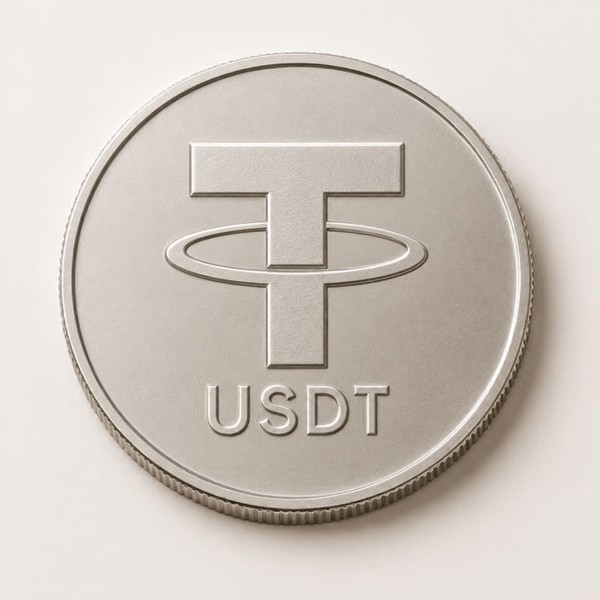
A U.S. dollar-pegged stablecoin used for trading, payments, settlement and transferring digital value across multiple blockchain networks.
Tether USD, written as USD₮ and commonly identified by the ticker USDT, is a stablecoin issued by Tether. It is designed so that one USD₮ tracks the value of one U.S. dollar. Tether states that its tokens are backed by reserves and that the value of the issuer’s reserve assets exceeds the value of its token liabilities.
USDT is a blockchain token rather than a bank deposit or a government-issued digital currency. Users normally obtain it through exchanges, wallets, payment providers or eligible Tether services. Its market price can sometimes move slightly above or below one dollar, and access to direct redemption depends on Tether’s eligibility, verification and service requirements.
Creation: the project was founded in 2014 by Brock Pierce, Reeve Collins and Craig Sellars. It was first announced in July 2014 under the name Realcoin. The project was renamed Tether in November 2014 to express the idea of connecting, or “tethering,” blockchain tokens to the value of traditional currencies.
Original technology: the first U.S. dollar token was issued through the Omni Layer, a token protocol built on the Bitcoin blockchain. This allowed a dollar-referenced token to move using Bitcoin-based infrastructure without being bitcoin itself. Tether later introduced USDT on additional blockchains to support different transaction costs, speeds, wallets and application ecosystems.
Project evolution: USDT developed from an early exchange and trading settlement tool into a widely supported digital-dollar token used for payments, transfers, liquidity and blockchain applications. Tether now classifies Omni as a deprecated protocol and no longer issues or accepts redemptions of Omni USDT, showing how the project has shifted toward newer blockchain networks.
Stablecoins form a practical bridge between traditional money and blockchain networks. Their steady reference value makes prices, invoices and settlements easier to understand than when every payment is denominated in a volatile cryptocurrency. They can support continuous settlement outside banking hours and provide digital markets with a liquid dollar-denominated asset.
For users and institutions, the quality of a stablecoin depends on its reserves, redemption arrangements, transparency, liquidity, compliance and technical security. Stablecoins can simplify digital payments, but users must still consider issuer, custody, smart-contract, exchange, regulatory and blockchain-network risks.
USDT is not limited to one blockchain. Tether’s current supported-protocol information lists native USD₮ on Ethereum, Avalanche, Tron, Solana, TON, Aptos, NEAR, Tezos, Celo, Kaia, Polkadot Asset Hub, Liquid and the Cosmos ecosystem through Kava. Each network uses its own token standard, contract address or asset identifier.
Common examples include ERC-20 USDT on Ethereum, TRC-20 USDT on Tron, a Solana token on Solana and a Jetton on TON. These versions are intended to be interchangeable through supported issuer, exchange or platform services, but they are not transferred in the same technical way. The sending and receiving platforms must support the exact same network.
Tether states that it no longer issues or is obligated to redeem USDT on several legacy protocols, including the Bitcoin Omni Layer, Algorand, EOS/Vaulta, Kusama and Bitcoin Cash SLP. Tokens labelled “USDT” may also exist as bridged, wrapped or third-party representations on other networks. Before transferring funds, users should verify the official contract or asset identifier and confirm that both the withdrawal and deposit services support the selected network.
USDT is used by individuals, businesses and blockchain applications that need a digital asset designed to remain close to the value of the U.S. dollar. Its users include:
Access, fees, redemption rights and legal treatment vary by platform and jurisdiction. A user who purchases USDT through an exchange does not automatically have the same direct relationship with Tether as an eligible, verified issuer customer.
USDT is primarily used for digital-dollar settlement. It lets users price assets in dollars, transfer value between supported wallets or exchanges, and complete blockchain transactions outside normal banking hours. It can also be used for merchant payments, remittances, payroll or supplier settlement where the recipient and local rules permit it.
In digital-asset markets, USDT provides liquidity and is commonly paired with cryptocurrencies for trading. In decentralized finance, compatible versions may be supplied to lending protocols, exchanged through liquidity pools or used as collateral. These activities can generate additional risks and any yield normally comes from a third-party platform or protocol, not simply from holding USDT.
USDT does not pay its own blockchain gas fees on most networks. A transfer normally requires the network's native asset, such as ETH on Ethereum, TRX on Tron or SOL on Solana. Users must therefore keep enough of the correct gas token and select the exact same network at both ends of a transfer.
Tether operates USDT through a centralized issuer model. According to Tether, new tokens are issued when eligible customers complete its verification process and purchase them. The issuer records the corresponding token liability and states that Tether tokens are backed by its reserves. Information about circulation and reserve assets is published through Tether's transparency reporting.
Eligible customers can request redemption according to Tether's current terms, minimums, fees and compliance requirements. In the wider market, most users instead buy or sell USDT through exchanges, brokers, wallets or payment providers. Market trading and arbitrage help keep the price near one dollar, but the token can temporarily trade above or below its target.
USDT provides exchanges and traders with a widely available dollar-denominated settlement asset. This can reduce the need to return to traditional banking rails after every trade and allows value to move between supported markets at any time. Its availability across multiple blockchains lets users choose among different costs, settlement speeds and application environments.
USDT is designed for price stability rather than investment growth. Greater usage can increase blockchain payment activity and market liquidity, but holding USDT does not guarantee a return, eliminate risk or guarantee an increase in the price of another cryptocurrency.
Tether states that its tokens are backed by reserves and that issuer assets exceed token liabilities. Reserve composition, custody, liquidity and the ability to process redemptions are therefore central to USDT's design. Users should review current transparency reports rather than assuming that “stablecoin” means the same thing as insured cash in a bank account.
Other risks include temporary loss of the one-dollar peg, exchange or wallet failure, smart-contract vulnerabilities, frozen or restricted funds, changing regulation and sending tokens through an unsupported network. A successful USDT transfer cannot normally be reversed, so the recipient address and network should always be checked before sending.
The following official Tether resources provide reserve information and the current list of supported and deprecated blockchain protocols.
Tether’s transparency page publishes information about tokens in circulation, reserve assets and reports intended to show the relationship between issuer assets and token liabilities.
View Tether TransparencyTether’s integration page lists active and deprecated networks, official USDT contract addresses, asset identifiers and technical guidance for supported blockchain protocols.
Check USDT Networks