ABOUT MONERO
Learn about Monero's purpose, network design, mining and supply.
Explore Monero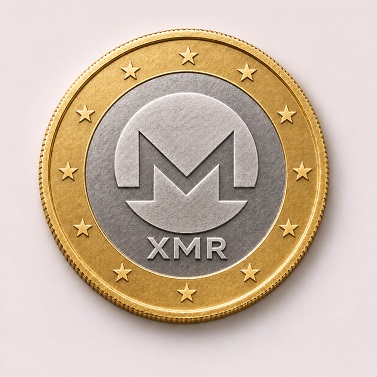
A decentralized cryptocurrency designed for private payments, with transaction confidentiality built into the network.
Monero is an open source cryptocurrency focused on financial privacy and peer-to-peer payments. Its native asset, XMR, is used to transfer value and pay transaction fees. Monero operates on its own blockchain rather than as a token on Ethereum or another smart-contract network. Its price fluctuates, and it is not a stablecoin.
Public blockchains commonly expose transaction amounts and address activity. Monero instead uses privacy mechanisms by default to conceal amounts and make it harder to identify the parties involved. The blockchain still allows the network to verify transactions and prevent double spending without publishing the same financial details visible on transparent networks.
Privacy can matter for ordinary reasons: protecting a salary, keeping business payments confidential or avoiding the publication of a complete spending history. Monero's design aims to reduce the information available to outside observers. It does not remove the need for secure wallets, careful handling of personal information and an understanding of how payments are made.
Stealth addresses create one-time destinations for incoming payments. A recipient can share a public receiving address without having every payment appear on the blockchain as a transfer directly to that same published address. The wallet identifies the outputs belonging to the recipient using its keys.
Ring signatures obscure which output in a group is actually being spent. Ring Confidential Transactions, known as RingCT, conceal transaction amounts while allowing the network to check the required mathematical relationships. These mechanisms address different parts of transaction privacy and work together rather than relying on a single hidden address.
Monero uses proof of work to secure its blockchain. Its RandomX mining algorithm is designed to work well with general-purpose CPUs and resist domination by specialized mining hardware. Miners contribute computing work, validate blocks and receive rewards and transaction fees. Running a node is different from mining: a node independently verifies blockchain data without necessarily competing for block rewards.
Monero has an ongoing tail emission of 0.6 XMR per block, with a target block interval of approximately two minutes. This provides a continuing base incentive for miners alongside transaction fees. Monero therefore does not have a fixed maximum supply. As the existing supply grows, the proportional annual increase from tail emission declines over time.
A Monero wallet uses private keys to identify incoming payments and authorize spending. View keys can support limited disclosure, while payment proofs can help demonstrate that a particular payment was made. These tools do not necessarily provide a complete, automatic audit of every outgoing transaction. Recovery information must be protected because access to spending keys can give someone control of the funds.
Transaction confidentiality is not a guarantee of anonymity in every situation. A recipient may know a sender's identity, an exchange may hold account records, and compromised devices can expose wallet information. Network connections can also reveal metadata. Using a remote node introduces different trust and privacy considerations from operating a personal node.
XMR holders face market volatility, custody risks and potential losses from incorrect transfers or malicious software. Confirm the destination and use a wallet that supports the Monero network. Ordinary blockchain payments cannot simply be reversed if funds are sent incorrectly. Privacy features also mean public wallet balance rankings and large-transfer monitoring cannot be interpreted in the same way as on transparent chains.
Learn about Monero's purpose, network design, mining and supply.
Explore MoneroRead about transaction privacy, wallets, nodes and technical specifications.
Read the Documentation